Table of Contents
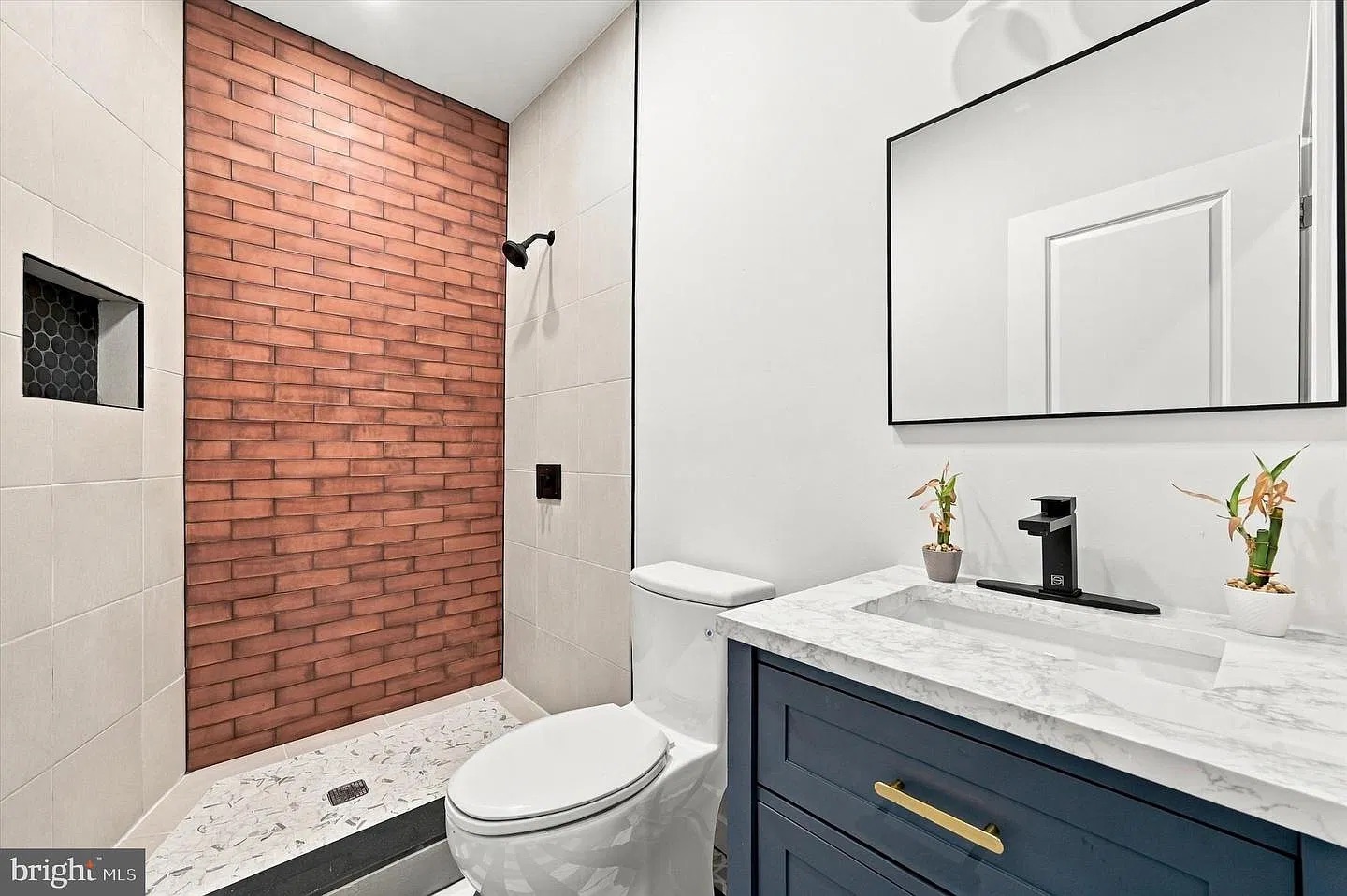
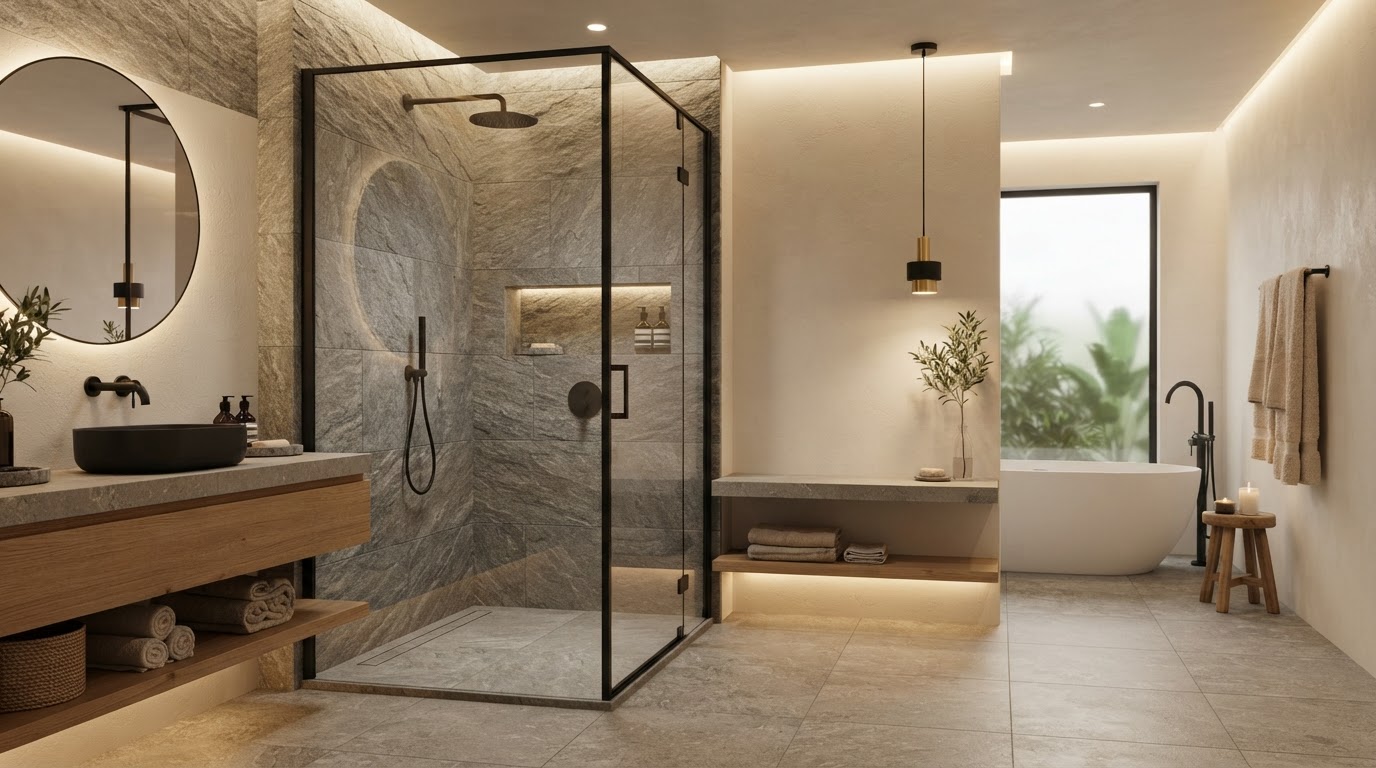
Bathrooms, mudrooms, and kitchens want water-tolerant floors. Porcelain tile or water-resistant vinyl handle splashes and standing water. Solid hardwood does not belong in a wet room because it swells, cups, and stains when wet.
Wet rooms get tile or vinyl
Bathrooms, mudrooms, and kitchens want water-tolerant floors. Porcelain tile or water-resistant vinyl handle splashes and standing water. Solid hardwood does not belong in a wet room because it swells, cups, and stains when wet.
The choice between tile and vinyl in a wet room is about feel and budget. Tile is harder, colder, and more durable. Vinyl is warmer, softer, and quieter. Both handle water, so the decision is about how the floor feels underfoot and how it fits the budget.
In a bathroom, the shower area drives the choice. A full bath with a shower needs a water-rated floor. A powder room without a shower can tolerate a wider range of materials, though water-rated is still the safer call.
Living areas suit hardwood
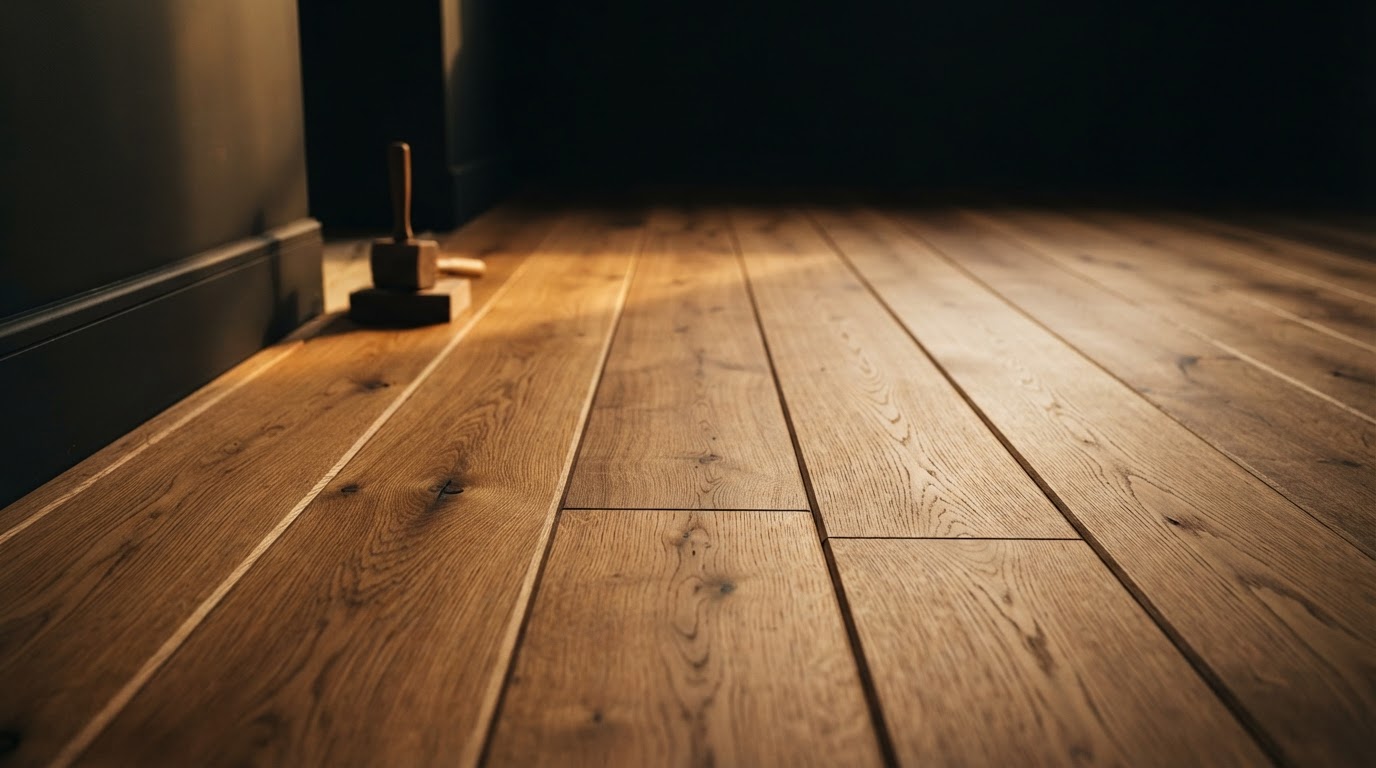
Living rooms, halls, and bedrooms take solid or engineered hardwood well. It can be refinished, which is why it lasts decades, and it adds warmth and value that other floors do not.
Solid hardwood is the refinishable choice. Engineered hardwood has a real wood wear layer over a stable core, which makes it more dimensionally stable and suitable for some below-grade or over-concrete applications where solid wood is not.
In a high-traffic hall or a living room, hardwood takes the wear and can be brought back to new with a sand and finish. That refinishability is what makes it the long-term choice for the rooms you live in most.
The subfloor decides a lot
No floor survives a bad subfloor. We check level and solidity before recommending a material, because some products telegraph every imperfection below. Vinyl and laminate show a wavy subfloor through the finish. Tile cracks over a flexing subfloor.
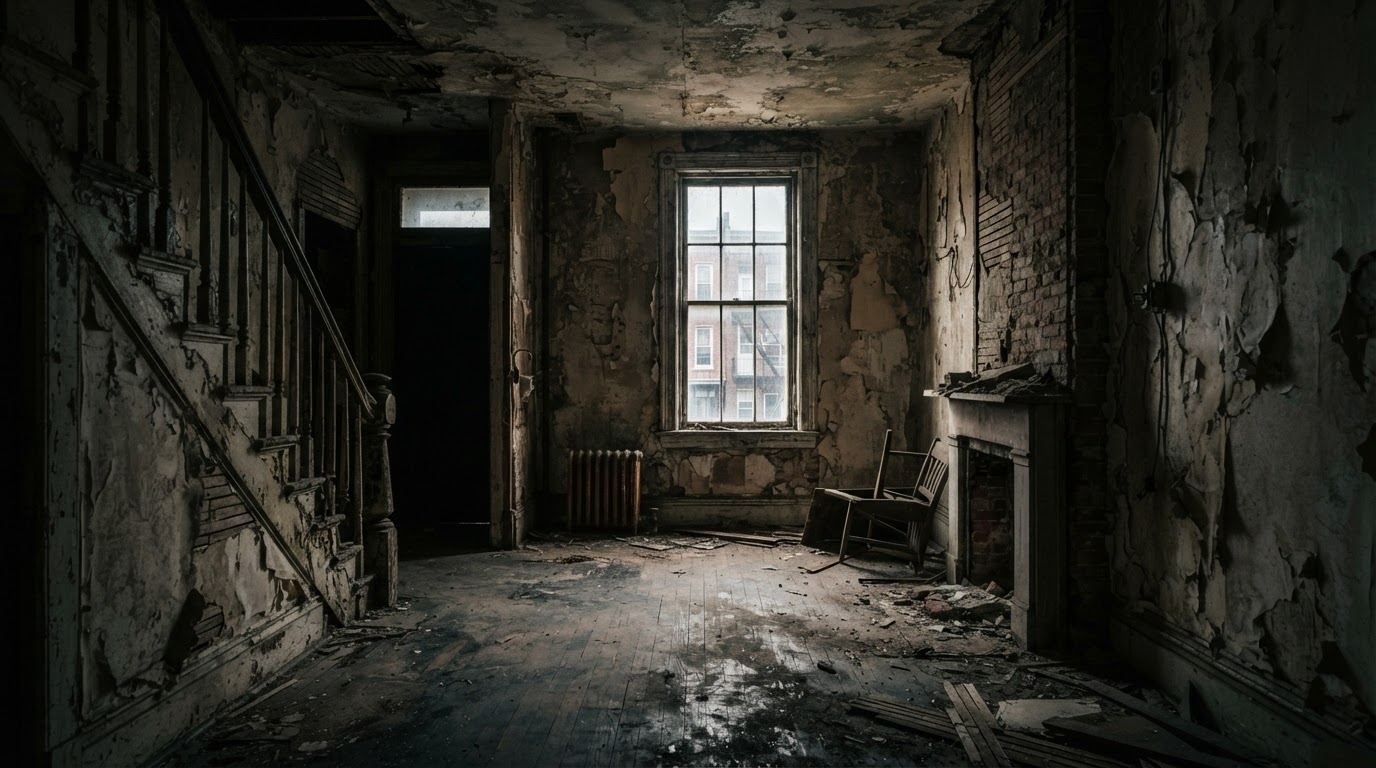
In an older Philadelphia home, the subfloor is often part of the job. Soft decking around the tub, a floor that slopes, or boards that have separated all need to be fixed before the new floor goes down. A new floor over a bad subfloor is a new floor that fails.
The subfloor prep is the unglamorous work that makes the finish last. We level, patch, or replace as needed, and we tell you what we find before we lay the finish. That honesty up front is what keeps the floor looking right for years.
Matching across rooms
When flooring runs through connected rooms, continuity matters. A floor that changes material at every doorway makes a home feel choppy. Running the same floor through the living areas, or choosing materials that complement, makes the home feel larger and more cohesive.
Sometimes a transition is necessary, like where a wood floor meets a tile kitchen. A clean transition strip, planned with the layout, makes the change look intentional rather than accidental. We plan the transitions with the flooring, not after.
The direction of the floor matters too. Wood runs that draw the eye down a hall make it feel longer. Runs that break up the space can make it feel shorter. We talk through the layout so the floor works with the home's flow.
Traffic and the long view
High-traffic areas, entries, halls, and kitchens, need floors that take wear. Hardwood, tile, and quality vinyl all qualify. A delicate floor in a high-traffic area shows wear fast and looks tired sooner.
Think about the long view, not just the install. A floor that has to be replaced in five years costs more than a floor that lasts twenty. Refinishability, durability, and how the floor ages all matter to the real cost over time.
We help you match the floor to the room and the life in it. The right floor is not the most expensive one. It is the one that fits the room, takes the wear, and still looks good in a decade.
Can I put hardwood in a kitchen?
Engineered hardwood can work in a kitchen, but spills must be cleaned quickly. Tile or vinyl is safer against standing water. A kitchen is a high-traffic, high-spill room, and the floor has to take both.
What is best for a rental?
Durable, replaceable floors like vinyl plank suit rentals because they handle wear and are easy to patch. If a plank is damaged, a single plank can be swapped without redoing the floor.
Does the subfloor have to be perfect?
It has to be level and solid. Some floors telegraph every imperfection, and tile cracks over a flexing subfloor. We check and prep the subfloor before the finish goes down.
LET'S TALK ABOUT YOUR PROJECT
Tell us what you are planning. We will review the scope and follow up with next steps.