Table of Contents
Bathroom lighting is usually the last thing people think about and the first thing they notice when it is wrong. A single overhead light casts shadows on your face at the mirror and makes the room feel flat.
Lighting is the upgrade people skip
Bathroom lighting is usually the last thing people think about and the first thing they notice when it is wrong. A single overhead light casts shadows on your face at the mirror and makes the room feel flat.
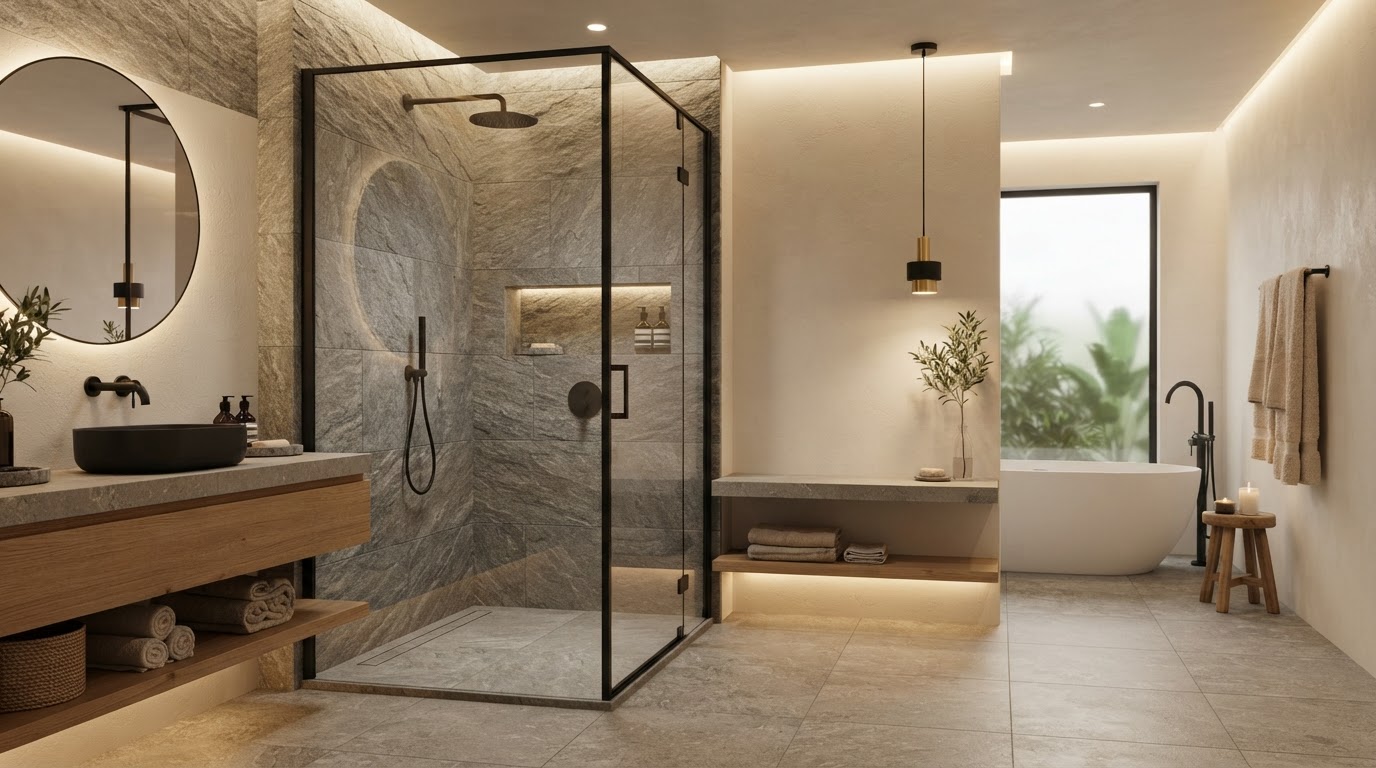
Sconces at the sides of the mirror light the face evenly. A layered approach, overhead for the room, task at the mirror, accent where you want it, makes the bathroom work at every hour. Dimmable fixtures let the same room work for morning routines and evening wind-down.
This is an upgrade that costs less than a new vanity and changes the room more. Good lighting makes an ordinary bathroom feel finished and a dated one feel current.
Ventilation is invisible until it fails
A bathroom without proper ventilation grows mold, peels paint, and rots the wood around the tub. An exhaust fan rated for the room size, vented to the outside, not the attic, is the upgrade that prevents the expensive failures.
In an older Philadelphia home, the bath fan often vents nowhere useful, or does not exist. Adding or replacing it is unglamorous and exactly the kind of hidden work that protects everything else.
A humidity-sensing fan that runs until the moisture is gone is worth the small extra cost. It does the job even when no one remembers to leave it on.
Fixtures you touch every day
The faucet, the showerhead, the handles, and the toilet are the things you touch and use every time. Upgrading them changes how the bathroom feels in use more than any tile choice.
A showerhead with the right spray pattern turns a daily routine into something you look forward to. A solid faucet feels better than a light one every time you turn it. A quiet, well-designed toilet is noticed every single day.
These are not the most expensive upgrades, but they are the most felt. Spending here and saving on a tile you are unsure about is often the smarter trade.
Storage that fits the room
A bathroom without storage ends up cluttered, which makes it feel smaller and harder to use. A recessed medicine cabinet, a vanity with real drawers, or a narrow linen tower each add capacity without eating floor space.
Recessed storage is especially useful in a small bathroom. A cabinet built into the wall between studs gives you storage where there was none, without protruding into the room. In a tight city bathroom, that is space you cannot afford to waste.
Think about what you actually keep in the bathroom before choosing storage. A tall cabinet for towels, a drawer for daily products, and a spot for cleaning supplies each have a place. Storage planned around real use stays organized.
Layout changes that pay off
Moving a fixture is not cheap, but sometimes a small layout change transforms how the bathroom works. A door that swings into the vanity instead of the room. A toilet moved off the sightline from the doorway. A shower expanded into unused corner space.
These changes cost more than a surface refresh because they involve rough plumbing. But if the current layout fights you every day, the rough-in work pays back in daily use for as long as you own the home.
We help you weigh which layout changes are worth the rough-in cost. Not every bathroom needs a new layout. The ones that do are usually obvious, because you bump into something every time you use the room.
What bathroom upgrade gives the most for the cost?
Lighting and ventilation. Good lighting changes how the room feels immediately, and proper ventilation prevents the expensive failures like mold and rot. Both cost less than a new vanity.
Should I upgrade the toilet during a remodel?
Often yes. The toilet is something you use every day, and a quiet, well-designed model is noticed constantly. If the existing one is old or inefficient, a remodel is the time to replace it.
Can a bathroom remodel be part of a 203(k)?
Often, yes. Bathroom work that addresses a real repair or brings a home up to livable condition can fit a 203(k). We write the detailed bid your lender needs. Talk to your FHA-approved lender for loan specifics.
LET'S TALK ABOUT YOUR PROJECT
Tell us what you are planning. We will review the scope and follow up with next steps.